
Petory Everyday Guides
Dog Collar vs Harness for Walks: 6 Questions Before Choosing
Choosing between a collar and a harness starts with the walk you need to manage and the equipment your dog can wear comfortably. The question is broader than which product looks sturdier. A suitable choice needs the right fit, a clearly identified leash connection and an introduction your dog can manage.
This guide compares the Adjustable Padded Dog Collar with Quick-Release Buckle with the Fleece-Lined Harness Vest for Cats & Dogs, using the Braided Rope Dog Leash, 150cm as a separate leash example. It helps organize a choice, rather than promising that one item suits every dog.
1. Write down what you need from the walk
Record the everyday situation: a familiar route, busy entrances, time spent waiting, and whether the dog already accepts their current equipment. Separate those observations from problems such as persistent pulling. A shopping description alone cannot establish why a walk is difficult.
The American Kennel Club explains that collars and harnesses have different advantages and limitations depending on the dog. Use that as a reason to assess the individual situation, not as an endorsement of a specific product or a guarantee of better control.
2. Understand the collar option
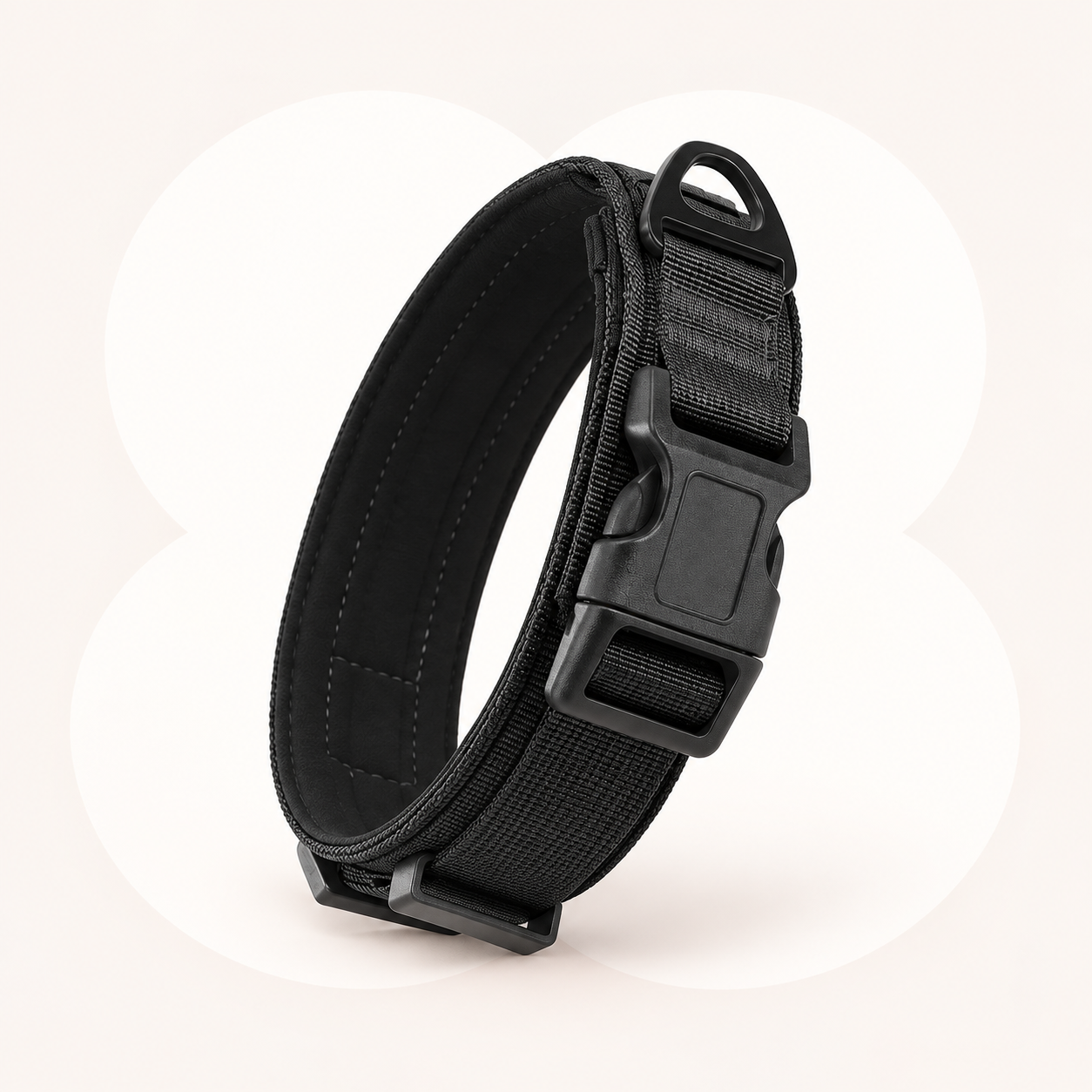
The padded collar uses polyester webbing, a soft black lining, side-release buckle and leash attachment ring. Its stated strap width is 3.8 cm / 1.5 in. The M neck-fit range is 38–44 cm / 15.0–17.3 in, with L and XL providing other adjustment ranges.
Those dimensions describe the collar, not your dog’s suitability for it. Measure the actual neck and inspect the fitted position before deciding. A broad strap or substantial-looking ring does not by itself give you a load rating, an escape-proof result or a reason to disregard pulling.
3. Understand the lined harness vest option
The harness vest combines polyester fabric, fleece lining, a raised collar, back zipper, adjustable webbing, buckle and two metal leash rings. It includes one selected vest. The leash and photography props are not part of the purchase.
This is a lined garment as well as walking equipment, so consider weather and your dog’s comfort. It is not automatically suitable for every season or climate. Sizes run S through 5XL, but verified chest and back measurements are currently unavailable; confirm those measurements before choosing, rather than using the letter or breed alone.
4. Identify the intended attachment before clipping on
Find the attachment points specified for the exact item and follow its instructions. Do not connect a leash to decorative trim, a clothing opening or a ring whose purpose you have not confirmed. The presence of two rings does not tell you to improvise how they should share a connection.
The separate braided leash is non-retractable, 150 cm / 59.1 in long and 1.2 cm / 0.47 in wide, with a loop handle and gold-tone snap hook. Its length is a planning measurement. It is not a certified load limit or a guarantee that any collar, harness and hook combination is suitable.
5. Check the whole combination in a secure place
Observe the fitted equipment before beginning the route: can the dog move naturally, does anything shift, and is the connection clear? Follow the fitting directions and resolve uncertainty somewhere secure. Dogs Trust emphasizes comfortable movement and an appropriate fit when choosing a harness.
| Question | Collar example | Lined vest example |
|---|---|---|
| Measurement to confirm | Actual neck and adjustment range | Chest, back and intended fit |
| Construction to inspect | Buckle, slider and attachment ring | Zipper, webbing, buckle and leash rings |
| Clothing coverage | Neck strap | Lined coverage across the body |
| Purchase contents | Collar | One vest; separate leash needed |
A photograph only shows one moment and one animal. Do not use it as proof that the same setup fits another dog, especially when a verified measurement chart is missing.
6. Separate equipment choice from training needs
A change of equipment and a walking plan are separate decisions. Do not label this vest “no-pull” or expect a new collar to remove the need for gentle lead training. Dogs Trust notes that a harness does not replace learning to walk comfortably on the lead.
If equipment causes discomfort, stop and review the fit instead of continuing until the dog “gets used to it.” Ask a qualified professional about ongoing handling or walking difficulties, and seek veterinary advice if pain or a health issue is suspected. Keep the purchase tied to the problem it can actually address.
Before you continue
- Describe the walk and the dog’s existing response to equipment.
- Confirm the specific measurements and adjustment available.
- Identify the intended attachment and compatible leash before use.
- Consider lining, weather and movement as part of the choice.
Frequently asked questions
Can a ring or hole on ordinary pet clothing replace a harness?
An opening may only allow access to equipment underneath. Use a connection explicitly intended for a leash; clothing appearance alone does not establish a restraint function.
Is this harness vest automatically the best choice in warm weather?
No. It has a fleece lining and body coverage. Consider the conditions and the individual dog rather than assuming a lined item is suitable throughout the year.
Does the vest include the braided leash?
No. The vest includes one selected vest, while the braided leash is a separate product. Check both fit and purchase contents before ordering.
Products in this guide
Written from published product details checked on October 27, 2026. Follow the instructions for each specific item.