
Petory Everyday Guides
How to Introduce a Dog to a Fleece Vest Without Rushing
A dog standing still in new clothing is not automatically enjoying it. Before planning a walk or photograph, check whether the garment is useful, whether the fit is appropriate and whether your dog can choose to approach it. Getting dressed is a process, not a task to finish at any cost.
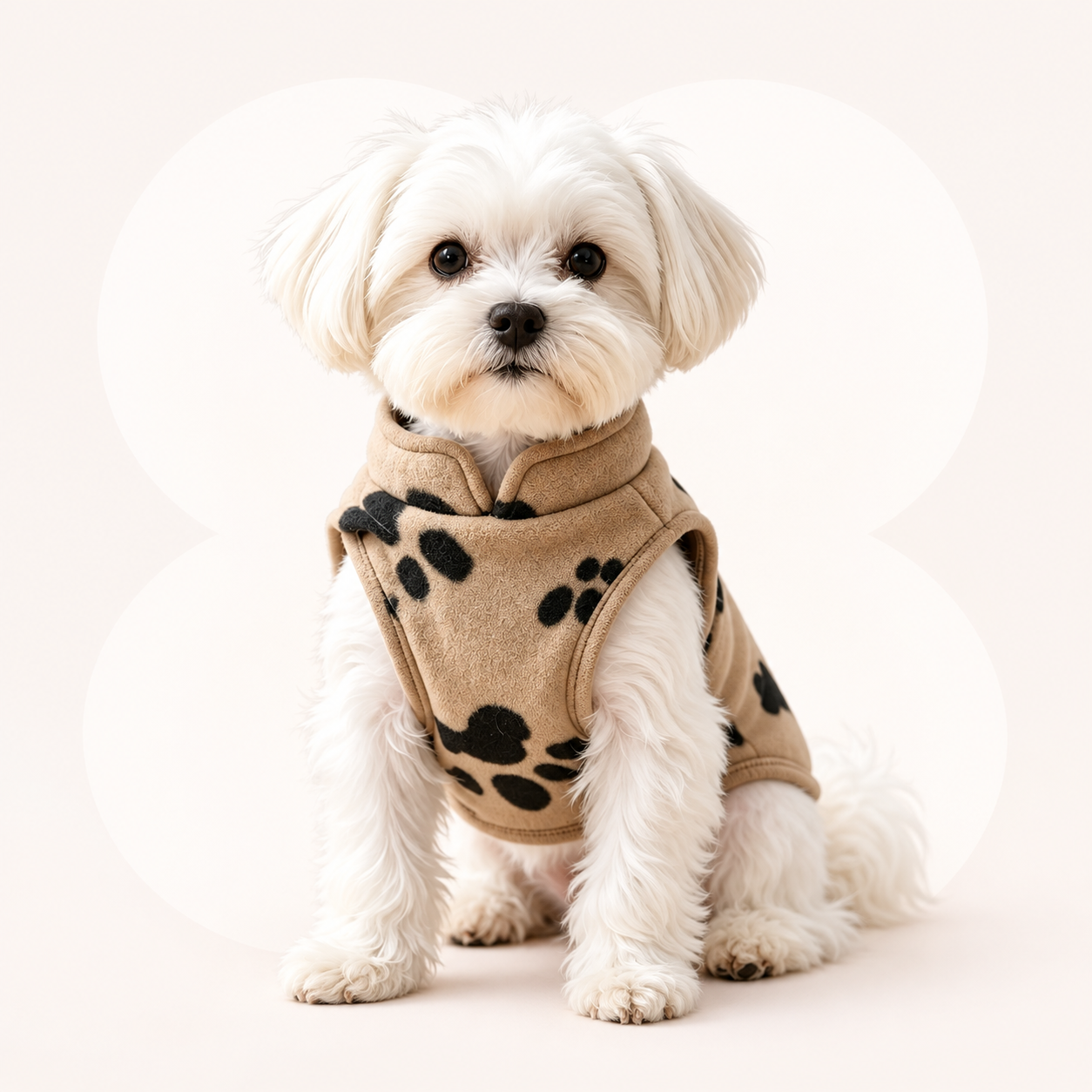
This guide uses the Fleece Vest for Cats & Dogs – Paw, Bone & Plaid as a practical example for dogs. Although the product is listed for cats and dogs, this introduction plan is about dogs; do not assume a cat will respond to the same handling.
1. Decide whether the extra layer is useful
Consider the conditions and the individual dog rather than the month on the calendar. A cool outing and a warm indoor session are different situations. PDSA advises considering the dog’s individual needs and ensuring clothing allows normal activity.
The listed fleece vest is a sleeveless garment, not a claim of waterproof protection or suitability at a specified temperature. If a layer is unnecessary, a shopping decision does not create a need to wear it. You can choose a different activity instead of practicing dressing.
2. Resolve fit questions before an introduction
The vest offers Sand Paw High Collar, Sand Paw Crew Neck, Red Buffalo Plaid, Midnight Bones and Cream Tartan. Both sand paw-print necklines are available; the other three styles have high collars. A difference in neckline is worth checking before the garment reaches your dog’s head.
Its chart gives upper weight references, not verified chest and back lengths. For example, M lists 2.5 kg / 5.5 lb and 2XL lists 8.5 kg / 18.7 lb. These are not fit guarantees. Measure your dog and confirm the missing dimensions before choosing a size.
3. Make the object familiar before trying to dress
Place the vest where your dog can see and investigate it while you remain nearby. Keep the session separate from a rushed departure. Dogs Trust recommends a gradual introduction to clothing, giving the dog time to become comfortable before progressing.
Notice what happens when you pick the garment up. You are adding movement and your hands to the experience, so do not assume the response will match a quiet sniff on the floor. Leave space to step away and avoid repeatedly following the dog with the vest.
4. Separate handling practice from fastening
Look at the actual opening and construction of the garment in your hands. Plan how it will go on and come off without catching fur or awkwardly moving a limb. Do not guess the dressing sequence from a model photograph or use instructions for a different fastening style.
Work in small steps your dog accepts. A voluntary approach to fabric is different from permission to hold the dog still and finish dressing. AKC’s clothing guidance recommends removing the item if the dog becomes stressed and returning to an easier stage later.
5. Watch ordinary movement, not only the pose
When a correctly fitted item is on, observe normal steps, turning and resting positions while supervising. Check that the garment stays where intended and does not interfere with ordinary movement. A still photograph cannot show how the neckline or arm openings behave when the dog walks.
| Observation | Practical response | What it does not establish |
|---|---|---|
| Relaxed investigation | Keep the session easy | Readiness for a whole walk |
| Moves away when you lift it | Pause and reduce the difficulty | Stubbornness |
| Freezes or moves unusually | Remove it and review comfort and fit | Automatic relaxation |
| Fabric shifts or catches | Stop and check the actual size | A need to tighten every opening |
Do not extend a session simply because a shopping description calls the fabric soft. Fabric feel and an individual dog’s experience are different things.
6. Plan the end of the session in advance
Keep the first experience easy to end, and remove the vest while you can do so calmly. The aim is useful information about fit and comfort, not achieving a fixed number of minutes. Avoid committing to an outdoor outing before knowing how the garment behaves indoors.
AKC advises supervision and removing clothing when a dog is unattended or crated. Keep suitable walking equipment as a separate decision: the fleece vest listing does not establish a leash attachment function. If discomfort persists or ordinary handling suddenly becomes difficult, seek appropriate professional advice.
Before you continue
- Decide whether the extra layer suits the dog and conditions.
- Confirm chest and back measurements instead of relying on weight alone.
- Allow exploration and introduce one handling step at a time.
- Stop for altered movement and finish with calm removal.
Frequently asked questions
If my dog freezes, should I wait until they move?
Do not take freezing as proof of comfort. Remove the garment calmly and review the situation. Avoid forcing a longer session to meet a time target.
Does a weight below the chart limit guarantee fit?
No. The chart is a starting reference. Verified chest and back lengths are not currently supplied for this vest, so confirm the actual dimensions before ordering.
Can I clip the leash to this fleece vest?
The listing does not identify it as a leash restraint. Use appropriately fitted walking equipment with a clearly intended attachment rather than improvising a connection to fabric.
Products in this guide
Written from published product details checked on October 27, 2026. Follow the instructions for each specific item.