
Petory Everyday Guides
New Kitten Home Essentials: A Practical First-Room Checklist
Prepare a kitten's essential resources before filling a shopping basket with accessories. The first-room plan needs appropriate food and water, a suitable litter arrangement, secure transport, somewhere to rest and hide, and a safe way to play. A complete shopping plan also includes items that may not be sold in one particular shop.
PDSA's kitten checklist and Blue Cross's home-arrival guidance are useful starting references. This article helps organise the room and compare a few catalogue options; feeding, veterinary care and individual needs should be planned with the people responsible for the kitten's care.

1. Put the non-negotiable basics first
Confirm what food and litter the kitten has been using with its previous carer, and have appropriate supplies ready. Arrange suitable food and water containers, a litter tray, a secure carrier and a quiet resting and hiding option. Plan veterinary contact and ongoing care separately from decorative shopping.
Do not assume a treat is the kitten's main food, or that a soft pet car bed is a secure carrier. Those products have different purposes. Check life-stage and use information before adding an item merely because its photograph includes a kitten.
2. Draw a first-room layout
Choose an initial room you can keep calm and manage consistently, with safe access for the kitten and the people caring for it. Place resources thoughtfully rather than lining food, water and litter up together for a convenient photograph. Leave room to reach and clean each area.
Check doors, windows, gaps, cords and objects that could be knocked down. Remove small craft pieces and packaging from floor level. A quiet starting room is a practical introduction space, not a reason to block access to necessary resources or leave the kitten without care.
3. Choose a resting option you can fit and maintain
A suitable familiar blanket or hiding spot may be useful before you decide which new bed is worthwhile. If choosing the Plush Donut Cat Bed with Raised Rim, the listed outer diameters are 40, 50 and 60 cm / 15.75, 19.69 and 23.62 in, including the raised rim.
Those diameters do not equal the central sleeping space. Check the kitten's body, entry and resting posture rather than selecting by a size letter alone. The listing states water washing and thorough drying; it does not specify every machine or dryer setting. Keep a usable resting choice available while bedding is being cleaned.
4. Make the water arrangement work on day one
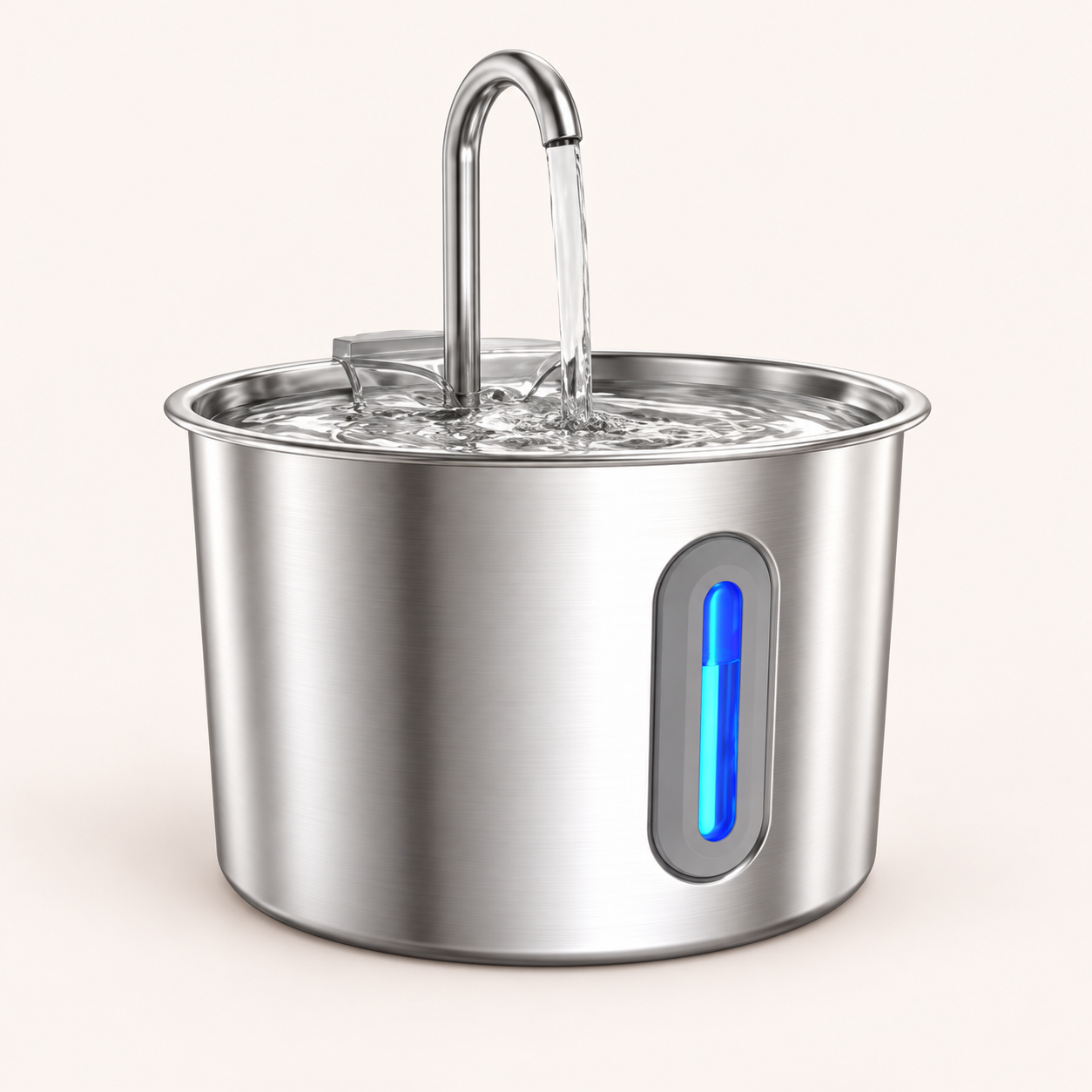
A clean, accessible bowl is a straightforward starting point while you check any powered accessory. If you choose the Stainless Steel Pet Water Fountain, 2.2 L, plan its location and power before relying on it. It has a 2.2 L / approximately 74.4 US fl oz reservoir and is USB powered.
The fountain includes a USB cable, filter, filter sponge, pump, spout, manual and cleaning brush; its power adapter is not included. Confirm the manual's requirements. Keep another drinking option during cleaning or introduction, and do not treat reservoir capacity as permission to ignore water checks.
5. Keep the first play choice manageable
Start with an appropriate activity you can supervise, rather than leaving a pile of new objects out together. The Interactive Cat Toy Ball with Rope Tail is a textured ball with a braided rope tail; inspect its condition and suitability for the individual kitten before play.
Stay present with rope or hanging-part activities, stop if pieces become damaged or are being swallowed, and store supervised-play items when finished. This listing does not document a motor or battery runtime. The first toy does not need to promise automatic entertainment to be a worthwhile shared activity.
6. Review the plan as a household
Write down who refreshes water, handles litter, checks food and puts play items away. A clear handover is more useful than several people each assuming someone else did the job. Keep product instructions and the veterinary contact easy to find.
| Need | Prepare before arrival | Optional comparison afterwards |
|---|---|---|
| Food | Appropriate familiar food and feeding container | Additional feeding accessories |
| Water | Accessible clean drinking option | Fountain and its power arrangement |
| Litter | Suitable tray, litter and cleaning supplies | Further layout adjustments |
| Transport | Secure carrier | Other outing accessories with distinct uses |
| Rest and hiding | Quiet, accessible resting choice | Bed shape, size and washable layers |
| Play and care | Suitable supervised activity and care plan | A small rotation of appropriate toys |
Before you decide
- Confirm food, litter and individual care information with the previous carer.
- Prepare secure transport and a veterinary contact, not only retail accessories.
- Check room hazards and keep water, litter and rest accessible.
- Assign everyday tasks and save the instructions for each new product.
Common questions
Does this list mean I must buy every product mentioned?
No. Start with necessary resources. Existing appropriate items may already meet a need; the catalogue examples help compare optional additions.
Can a fountain be the only water option immediately?
Keep an accessible alternative while checking setup, power and the kitten's response. A new accessory should not remove an existing drinking option before it is working for the kitten.
Must a kitten settle according to a fixed day-count rule?
This guide does not set an adaptation deadline. Use a calm, consistent introduction and seek appropriate care advice for the individual kitten instead of promising a particular timetable.
Products mentioned
Written from published product details checked on October 27, 2026. Individual care and setup instructions still apply.